
The complete guide
The Practical Buyer's Guide to H1 LED Headlight Bulbs
The problem with a tired halogen globe
Most people come looking for H1 LED headlight bulbs for the same handful of reasons. The old globes have gone dim and yellow. One side looks warmer than the other. Or the vehicle in question is a weekend project, a show car or a paddock ute, and the owner wants the front end to look sharp instead of looking like a 1990s rental.
Halogen globes are simple things. A filament glows inside a small glass envelope and most of the energy comes out as heat rather than light. That is fine, and halogen globes have done the job for decades, but they age. The glass darkens, the filament thins, and the colour drifts warmer as the globe tires. You notice it most when you replace only one side and suddenly the pair does not match.
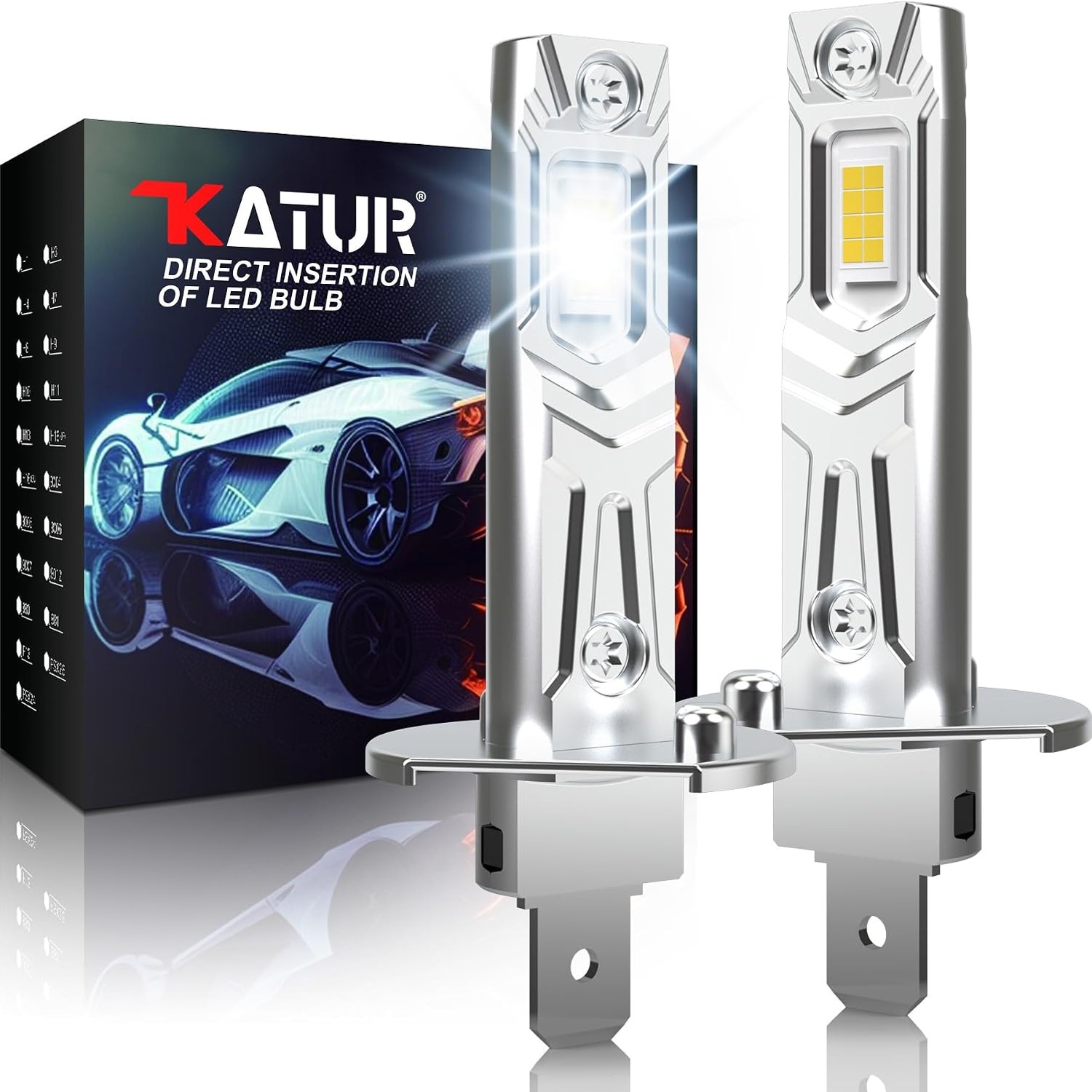
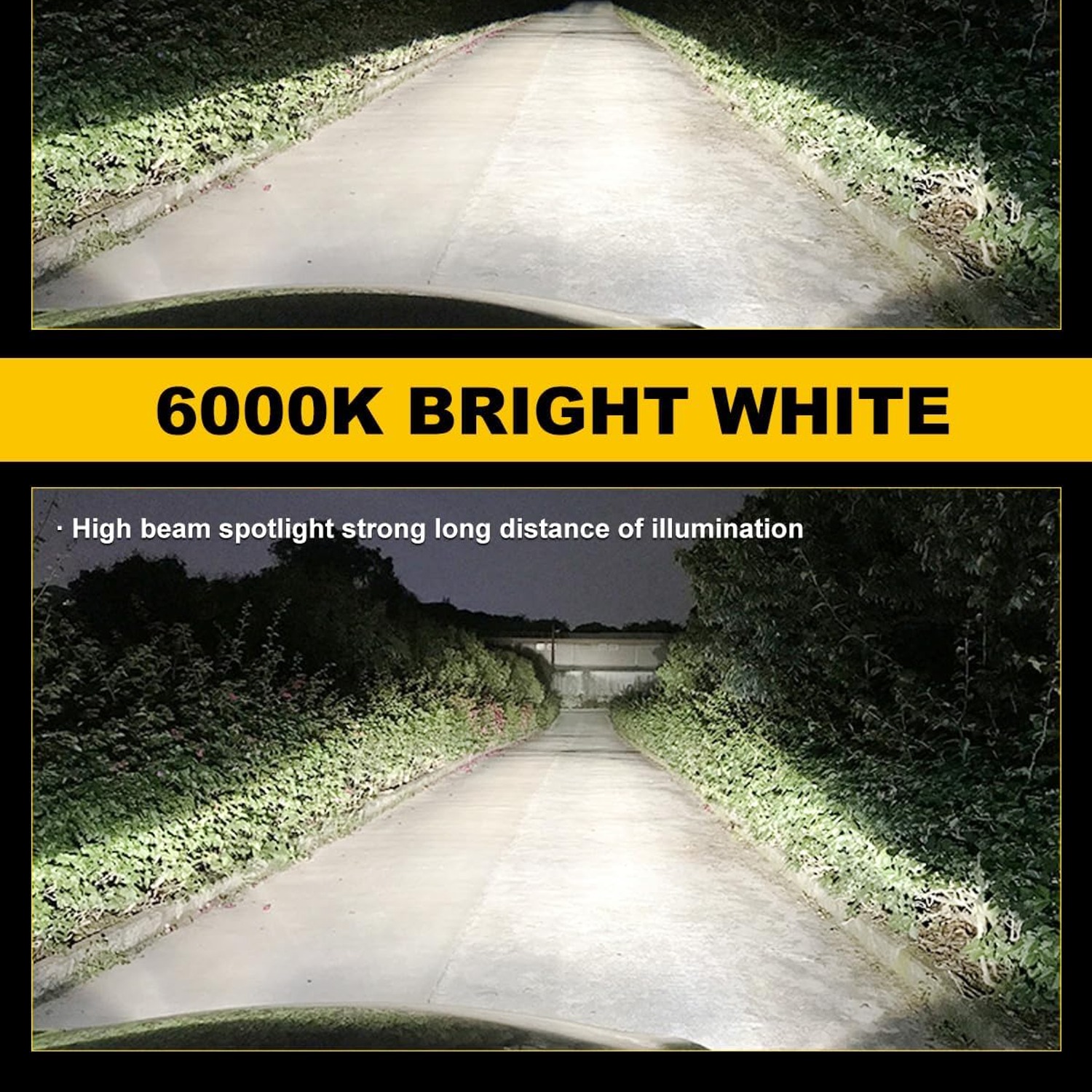
An LED conversion bulb takes a different approach. Small chips sit on a metal core, a driver feeds them the right current, and the body carries heat away so the chips stay in their happy range. The result is a white light at 6000K rather than a yellow one, drawn from a 12 volt supply at 40 watts per bulb.
A plain word about where you can use these
Before anything else, here is the part that matters. In Australia, fitting LED bulbs into headlights that were designed for halogen globes is generally not permitted on public roads. This set is sold for off-road, show and private property use. That means project builds, display cars, farm and station vehicles, work lights on private land, and anything that does not run on a public road with these bulbs in the headlight.
We are not going to dress that up or hint around it. If your plan is a daily driver that sees public roads at night, this is not the product for that job, and you should keep a correct halogen globe in the headlight.
How this particular set works
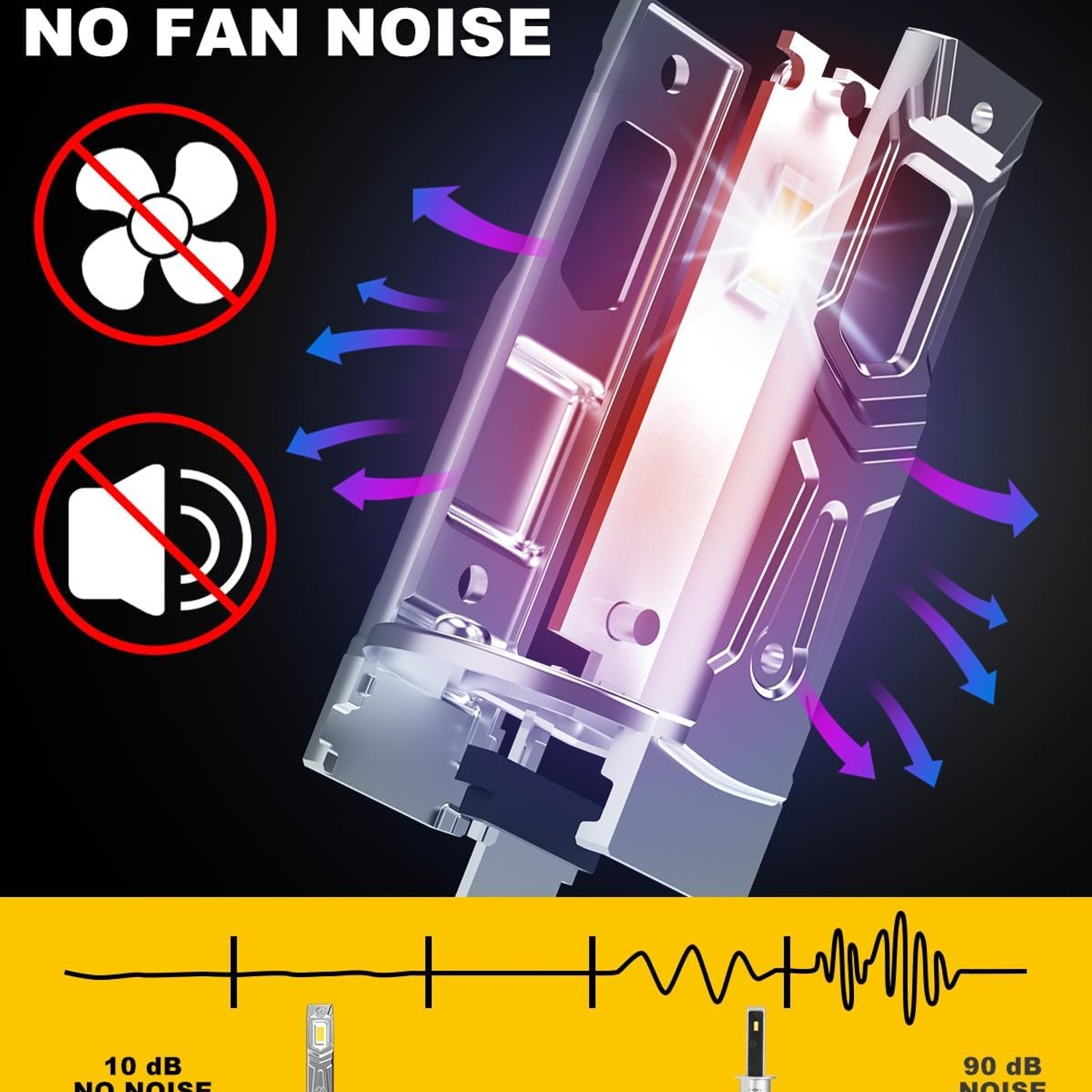
There are two main ways an LED bulb sheds heat. One is a small fan in the rear housing. The other is passive, where the whole body is metal and the heat moves out through the shell. This set is the second kind. The body is aluminium and there is no fan.
The trade is straightforward. A fan can move more heat, but it is a moving part. It can collect dust behind a headlight, it can start to buzz, and it is the piece most likely to fail long before the chips do. A fanless design has nothing to seize up and makes no noise at all. In exchange, it wants a bit of air around the base to do its work, which brings us to fitment.
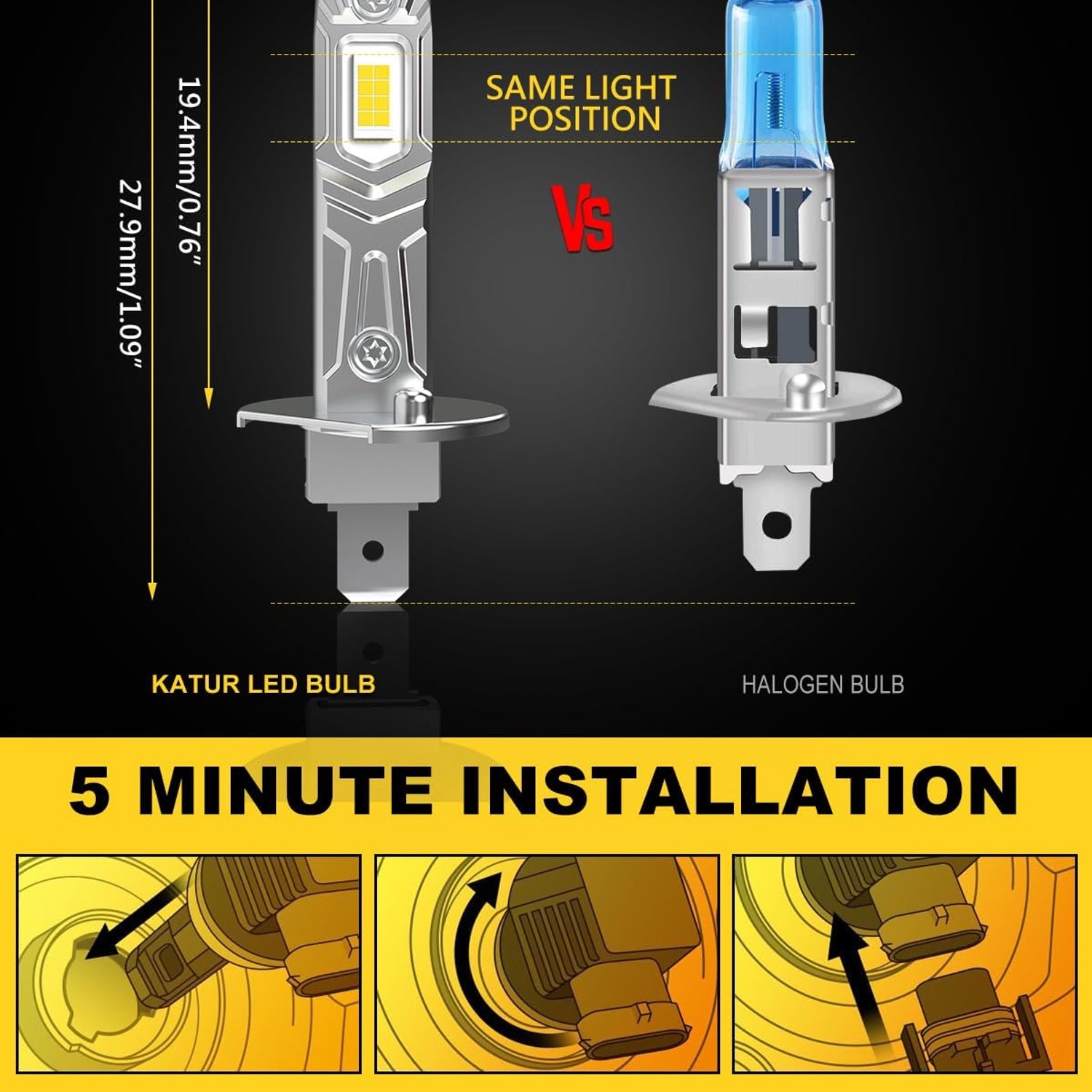
The other design choice here is that the driver sits inside the bulb. Plenty of LED bulbs come with a separate box on a flying lead that you have to mount, cable tie and waterproof somewhere behind the headlight. There is no box with this set. The whole thing is one piece, about the size of a halogen globe, which is genuinely the thing most people appreciate once they have fitted a few.
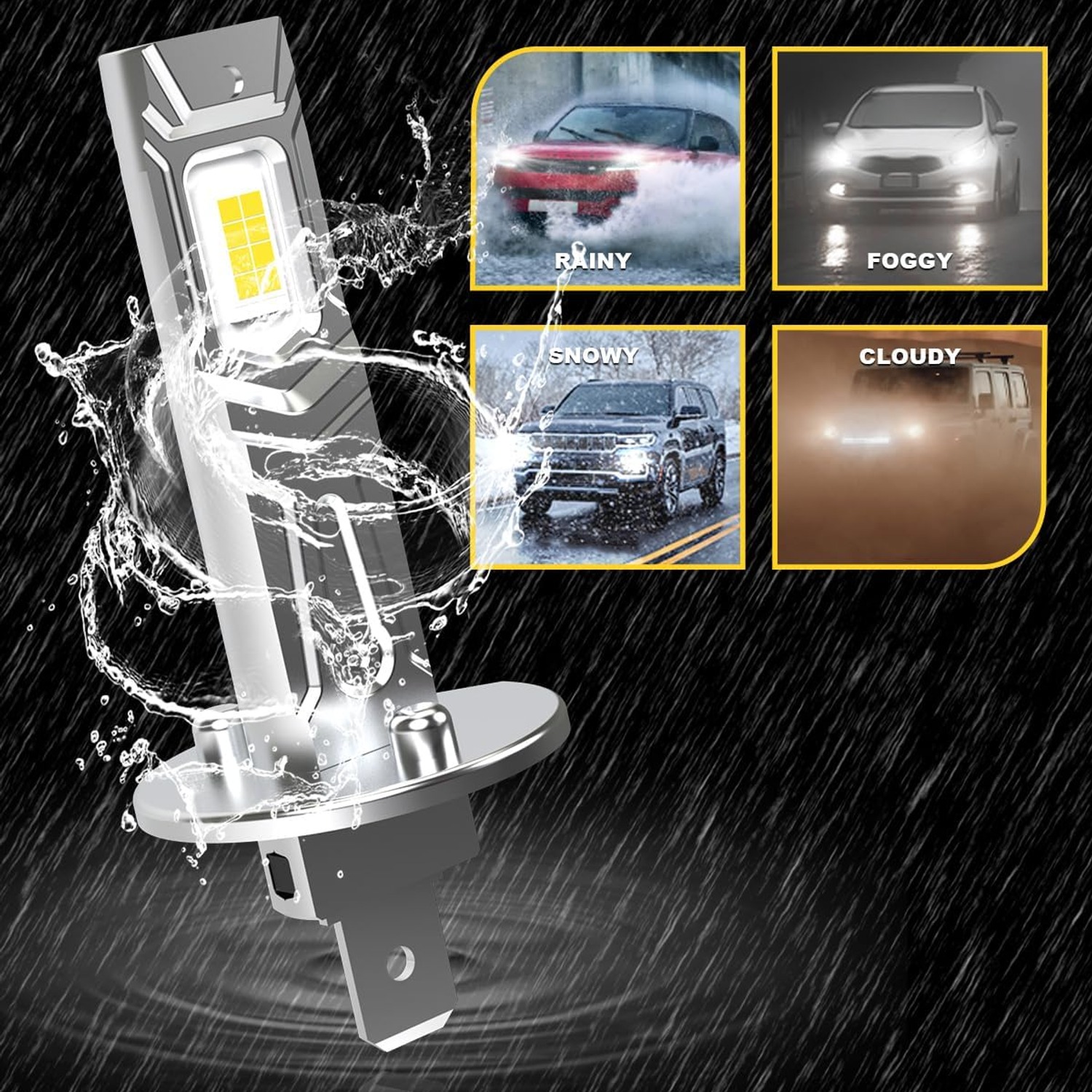
Sealing is rated IP65. Dust should not get in, and low pressure water jets from any direction should not cause harm. That is a reasonable spec for an open work light or a housing with a vented cover. It is not a rating for going under water, so treat it accordingly.
Who this suits
Project car owners are the obvious group. If you are rebuilding something and the housings take an H1 globe, a white pair tidies up the front end for shows and display without the hunt for a mounting spot for a driver box.
Property and farm vehicles are the other big one. Work lights, spotlights and older utes that live behind a gate often run H1 globes, and the IP65 rating plus the lack of a dust collecting fan suits that environment. People searching for the best off road led headlight bulbs are usually in this camp.
We will keep saying that, because it is the one point where buying the wrong thing causes real trouble.
How to choose, step by step
Start with the fitting code. Pull the globe you have now and read the base. If it does not say H1, this set will not fit your housing, and no amount of forcing will change that. Fitting codes are not interchangeable, and we list fitment by fitting type only. We cannot tell you that it fits a named vehicle.
Next, check your voltage. These are rated at 12 volts. If your machine runs a 24 volt system, you need a part made for that.
Third, measure the space. The bulb body is close to a halogen globe in size, which helps, but dust covers vary enormously. Take a tape measure to the depth behind the globe holder before you order. If space is very tight, a deeper aftermarket cover is a common fix.
Fourth, think about your vehicle's electronics. An LED draws far less current than the halogen globe it replaces, and some vehicles read that drop as a failed bulb. You might see a dash warning, a flicker at idle, or odd behaviour from automatic lighting. A CANbus decoder usually solves it, but one is not included here and you would buy it separately. Not every vehicle needs one, and there is no reliable way to know in advance other than fitting and seeing.
Finally, decide on fanless versus fan cooled based on your environment. Dusty paddock work and quiet displays both favour fanless. That is the choice this set has already made for you.
Fitting without the frustration
Work on a cold engine and a cold housing, because everything behind a headlight holds heat. Get a torch on the job rather than squinting at shadows.
Most H1 holders use a spring clip or a twist collar. Release it, note which way the old globe sat, and bring the new one in by the metal base. Try to keep your fingers off the lens, not because it will instantly ruin it, but because a clean lens is just better.
If your holder allows the bulb to rotate, take an extra minute to set it square before you lock the clip. Chip orientation inside a housing affects how the light sits, and a rushed job is a job you will redo.
Seat the connector fully. A huge share of flicker complaints come back to a half seated plug or a tired earth point, not the bulb. Check both before you go shopping for a decoder.
Looking after them
There is not much to it. Wipe dust off with a dry microfibre cloth and skip the solvents and abrasive pads. Keep the base clear so air can move around it, since that is how a fanless bulb does its cooling. Let the bulbs cool before you handle them after a long session.
Every few months, if the vehicle lives outdoors, pop the cover off and check the connectors are still dry and clean. Grit and moisture at a plug cause more trouble over time than anything happening inside the bulb.
The short version
This is a pair of H1 fitting LED bulbs, 12 volts, 40 watts each, 6000K white, fanless with an aluminium body, driver built in, IP65 rated, 150 g for the set. They are sold for off-road, show and private property use, and in Australia they are not for use on public roads in headlights designed for halogen globes.
Check that your globe code reads H1. Check you have the depth behind the housing. Expect that some vehicles will want a CANbus decoder, which is sold separately. Do those three things first and the rest of the job is a ten minute swap.