
The complete guide
H7 Headlight Globes, A Straightforward Buyer's Guide
When one headlight goes dark
It is rarely dramatic. You pull out of the driveway and the road ahead looks lopsided, or a car coming the other way gives you a quick flash, or you notice the shadow on a garage door is only half there. One globe has gone.
A headlight globe is a wear part. It has a thin filament inside a glass envelope, and that filament spends its life getting very hot, cooling down, and shaking around on whatever road surface you happen to be driving. Eventually it gives out. That is normal, not a sign that anything else is wrong with the car.
The fix is usually cheap and quick, as long as you buy the right shape. That is what this guide is about.
What H7 actually means
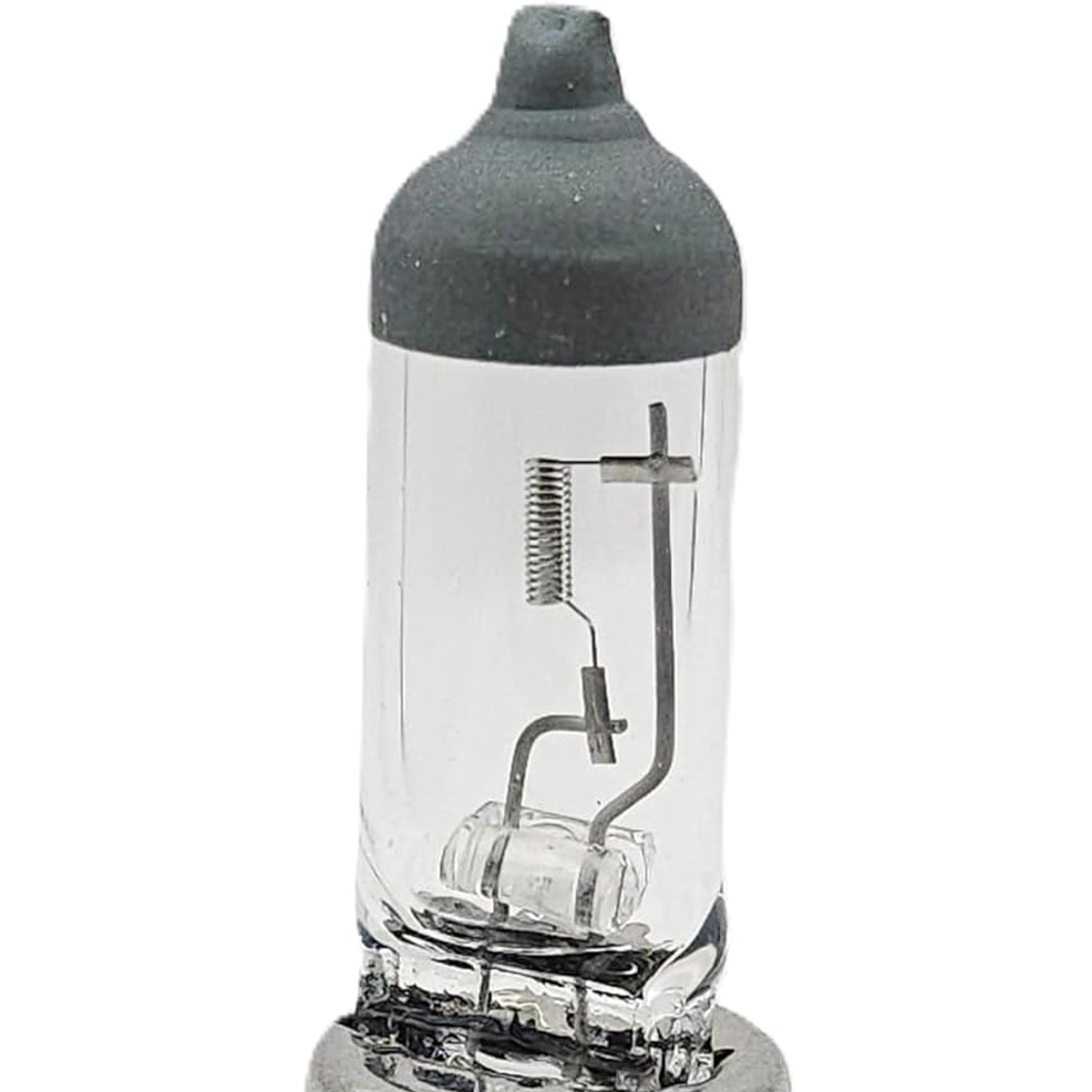
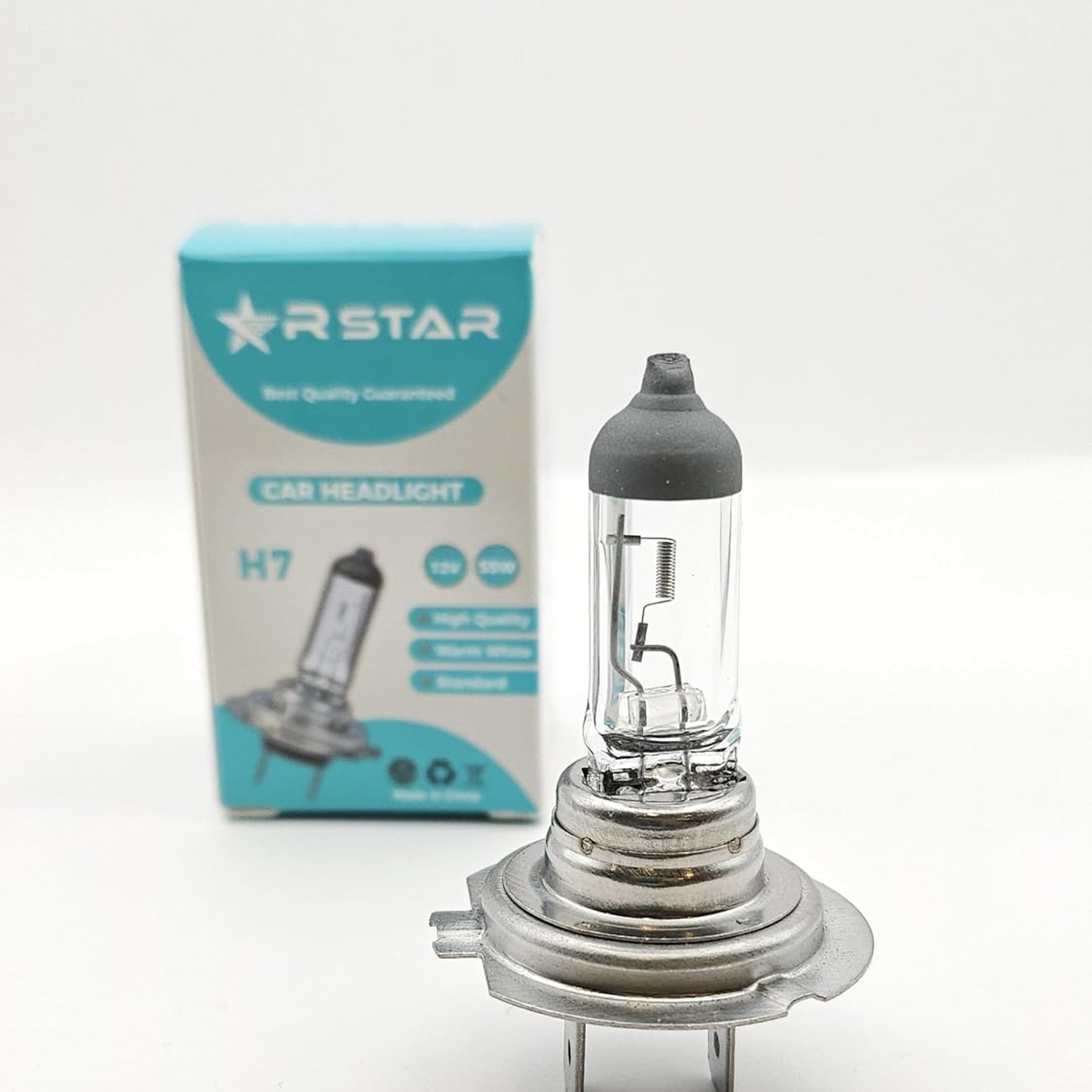
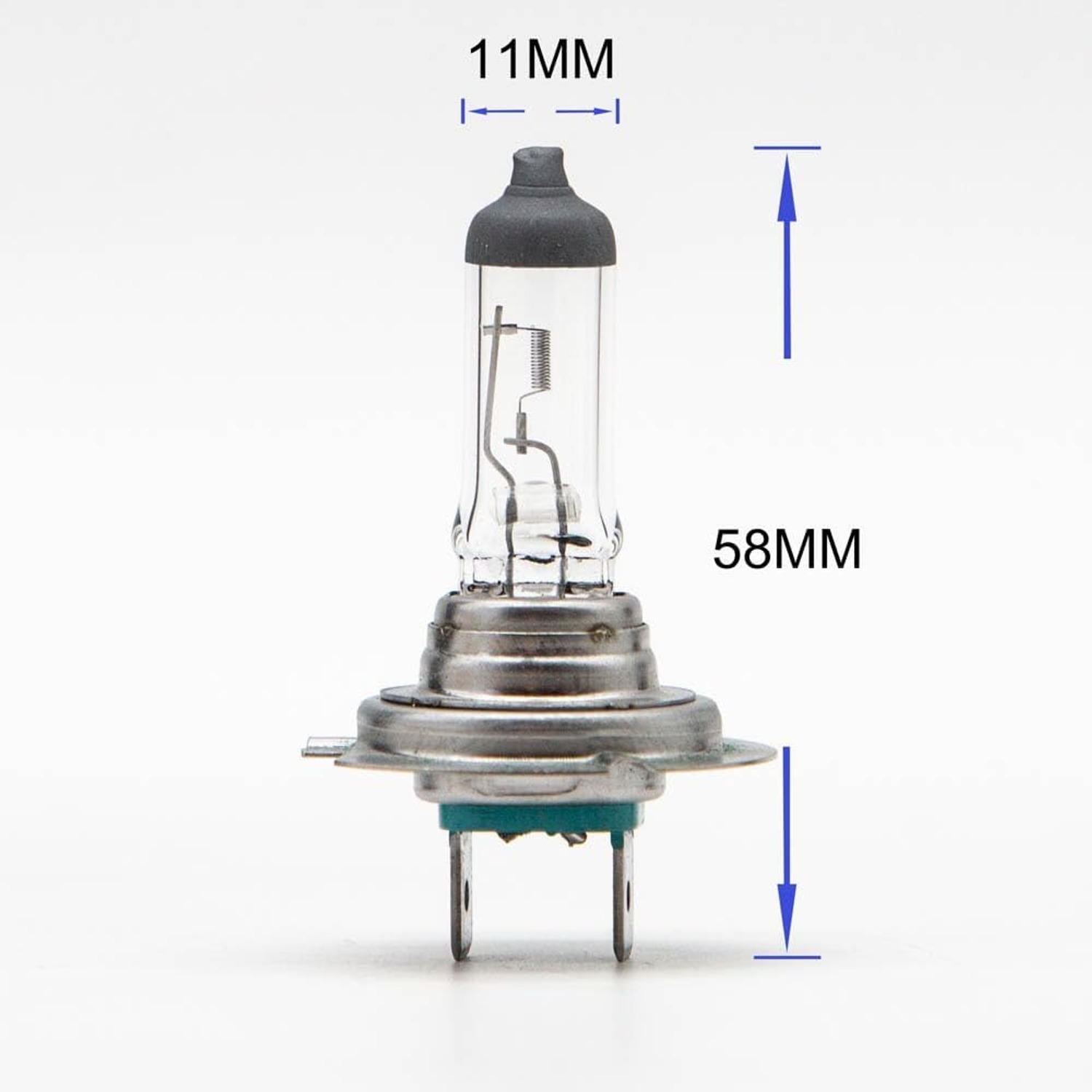
It describes the physical shape of the globe, the position of the filament, and the way the base locks into the headlamp. An H7 globe has a flat base with two small locating tabs and a single filament inside.
Because it is a standard, any H7 globe should seat in any H7 socket. That is the whole point of the system. It means you do not need a globe made specifically for your car model, you need a globe made to the H7 pattern.
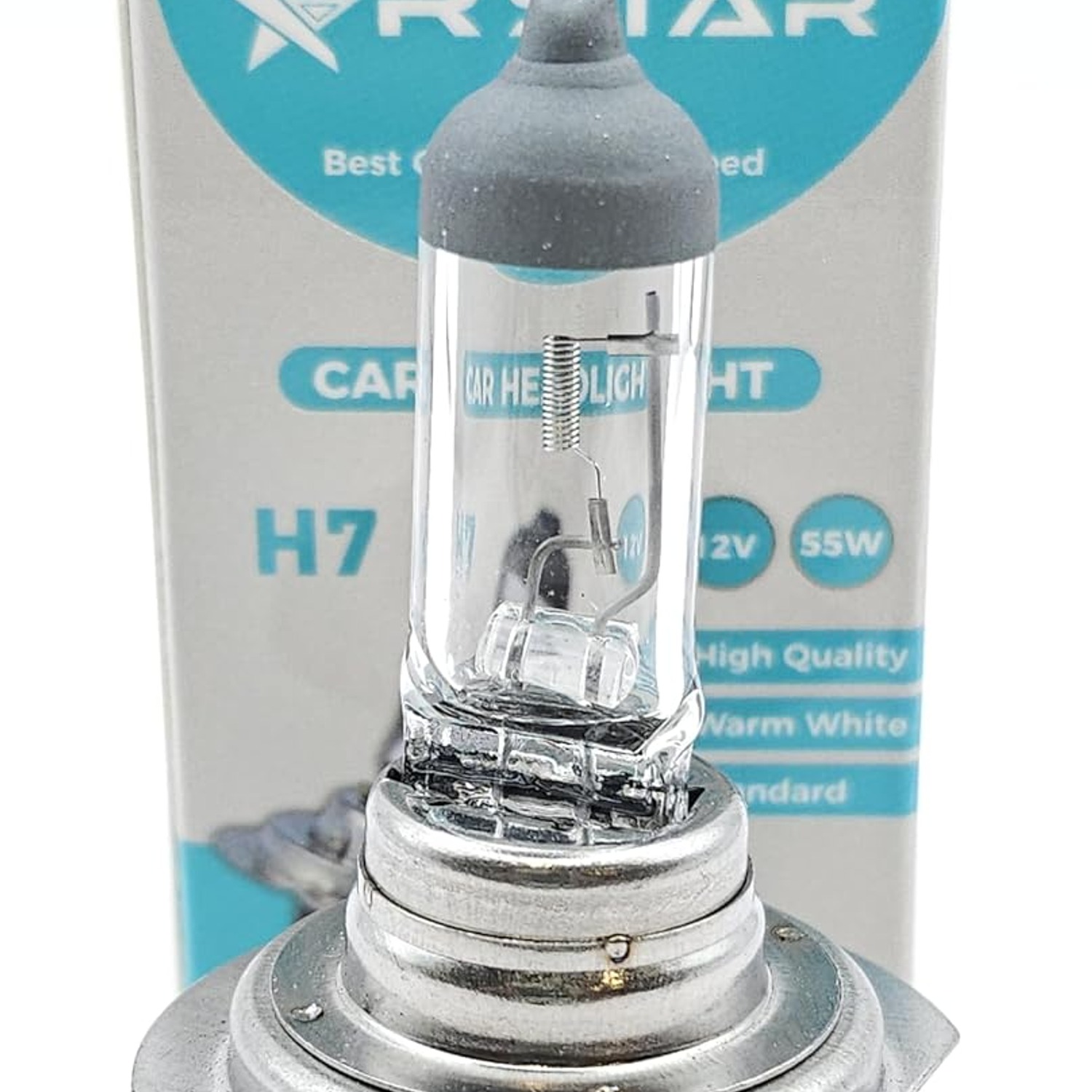
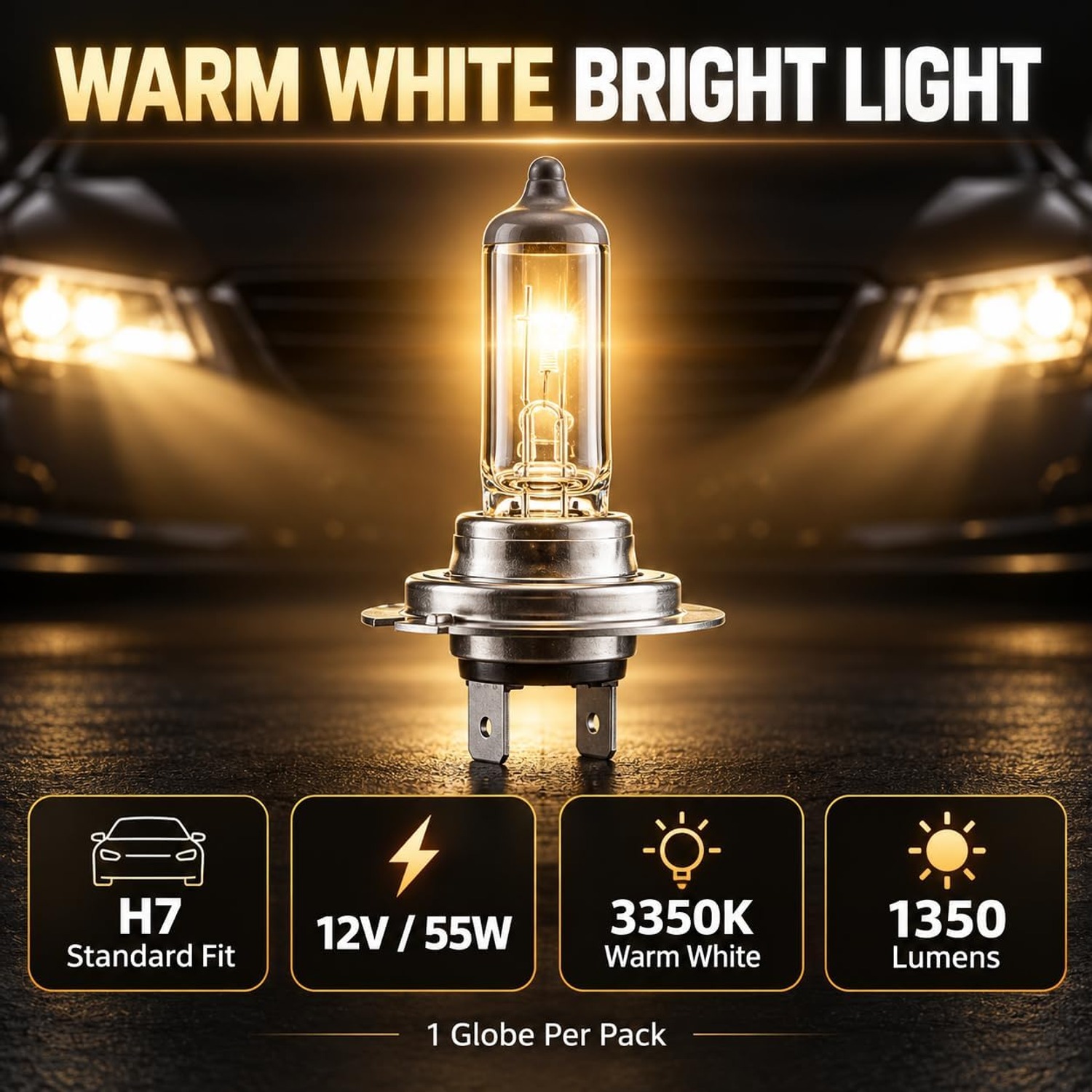
The globe on this page is a single H7 halogen globe rated at 12 volts and 55 watts, with a colour temperature of 3350 Kelvin. Those three numbers cover most of what you need to know. Twelve volts matches a normal car electrical system. Fifty five watts is the usual draw for an H7 halogen. And 3350 Kelvin is a warm white, the colour people picture when they think of ordinary headlights.
Working out whether your car takes H7
There are two reliable ways to check, and one that is not reliable at all.
The first good way is the owner manual. Most manuals have a page near the back that lists globe types by position, so you can see at a glance whether the low beam is H7, H11, H4 or something else. Write it down, because you will want it again.
The second good way is to pull the old globe and read it. The fitting type is stamped or printed on the base, usually alongside the voltage and wattage.
The unreliable way is guessing from what the car looks like or from what a friend's similar car uses. Manufacturers change globe types between model years and between trim levels. A headlight bulb that suits one version of a car often does not suit another. Check the actual globe.
One more thing worth knowing. The H7 globe might be your low beam, your high beam, or a fog light, depending on how your vehicle is built. Some cars use H7 in more than one position. The fitting is the same regardless, so the globe does not care which job it is doing.
Why colour temperature matters more than you think
Kelvin is a measure of light colour, not brightness. Lower numbers look warmer and more yellow. Higher numbers look cooler and bluer. At 3350 Kelvin this globe sits in the warm white range, which is where standard halogen globes live.
That matters in two ways. First, it keeps your headlights looking original. If you fit a very cool, blue toned globe on one side and leave a warm halogen on the other, the difference is obvious from outside the car and slightly odd from the driver's seat as well.
Second, warm light behaves predictably in rain and on wet bitumen, which is what drivers are used to reading. There is no need to chase an exotic colour when the goal is simply to have both headlights working the way they did when the car was new.
Buy one or buy two
This pack holds one globe. That is deliberate, because sometimes one is all you need.
But think about the maths. Both of your headlight globes were almost certainly fitted at the same time, and they have been switched on together ever since. When one fails, the other has done identical hours. It is not unusual for the second one to go within a few weeks or months of the first.
Replacing both at once means you only open the headlamp housing once, you only do the finger gymnastics behind the airbox once, and the two sides stay matched for brightness and colour. On most cars this is the sensible call. If you do decide to change just one now, consider ordering a second as a spare and keeping it in the glovebox.
A spare h7 globe is a tiny thing to carry and makes a dark roadside a lot less annoying.
Fitting it without breaking anything
Most H7 changes are quick. Open the bonnet, find the back of the headlamp, and you will usually see a round rubber boot or a plastic cap. Pull or twist that off and the globe is behind it, held by a wire spring clip or a twist collar, with an electrical connector pushed onto the base.
A few rules make the job go smoothly.
Turn the headlights off and the ignition off first. Let everything cool. Halogen globes run genuinely hot and so do the parts around them.
Do not touch the glass with bare fingers. Skin leaves oil on the quartz, and that spot heats unevenly once the globe is on, which can shorten its life. Hold the base or the collar. If you do touch the glass, wipe it with a clean cloth and some methylated spirits and let it dry before fitting.
Note how the old globe sits before you remove it. The tabs on the base only go one way, so if it does not slot in easily, rotate it rather than push harder.
Seat the new globe fully and make sure the clip or collar locks home. A globe that is not fully seated sits at the wrong angle and throws the beam off. Refit the cap properly too, since it keeps water and dust out of the housing.
Then switch on and check both low and high beam before you put the tools down.
Some cars make this harder than others. If the headlamp is buried behind the battery or the washer bottle, you may need to remove a cover or loosen a bracket. If reaching in feels like it will break something, a workshop will do it quickly and cheaply.
Looking after your lights
Globes themselves need no maintenance. The rest of the headlight does benefit from a little attention.
Keep the lens clean. A film of road grime cuts output more than people expect, and no globe will fix a dirty lens. Give the front of the headlamps a wipe when you wash the car.
Check that the rubber boot behind the headlamp is seated properly. If moisture gets into the housing it fogs the reflector and shortens globe life.
Glance at both headlights every so often, ideally against a wall at night. It is easy to drive for weeks with one side out and never notice from inside the car.
If a new globe fails very quickly, that is worth investigating. Repeated failures can point to vibration, a poor connector, or a charging system running high. A warm white h7 globe fitted properly in a sound system should not need frequent changing.
A note on claims
Likewise, no ADR approval or E-mark is stated for this globe, so we do not claim one. If you need a globe carrying a particular approval marking, check what is printed on the base of the globe you are removing and contact us before you order. We would rather answer the question up front than have you deal with a return.
The short version
If your headlamp takes an H7 globe and you want it working again without changing the look of the car, this is the straightforward option. It is 12 volts, 55 watts and 3350 Kelvin, which is standard halogen territory.
Confirm the fitting in your manual or on the old globe. Order two if you want both sides matched, which most people should. Keep your fingers off the glass, let things cool before you start, and seat the globe properly.
That is the job. Ten minutes on most cars, and the road ahead looks right again.