
The complete guide
HB3 9005 LED Headlight Bulbs - A Practical Buyer's Guide
Start with the honest bit
If you are shopping for HB3 9005 LED headlight bulbs in Australia, there is one thing you need to know before anything else. Fitting LED bulbs into a headlight housing that was built around a halogen globe is generally not permitted on public roads here. This set is sold for off-road use, show vehicles and private property. It is not sold as a road upgrade, and we are not going to pretend otherwise.
That rules out a lot of buyers, and it should. But it still leaves plenty of people with a genuine use for a pair like this: a paddock ute, a competition car, a track day vehicle, a trailer-queen show build, a machine that never sees a public road. If that is you, the rest of this guide is worth reading.
What the HB3 and 9005 codes mean
HB3 and 9005 are the same fitting. You will see one code or the other depending on where the vehicle was built and who printed the packaging. Pull the globe out of the headlight you want to change and look at the base. If it says HB3 or 9005, this set matches.
That matters because headlight bulb codes are not interchangeable. An H11 will not sit in an HB3 holder, and nothing good comes from forcing a base that was not made for the socket. We list fitment by code only here. We do not say a bulb fits a named vehicle, because the same model can leave the factory with different lamp types depending on year and trim.
How an LED conversion bulb actually works
A halogen globe is a filament in a gas-filled envelope. Current flows, the filament glows, and the housing behind it is shaped around that specific point of light. An LED conversion bulb replaces the filament with LED chips mounted on a base that has the same fitting, so it clips into the same holder.
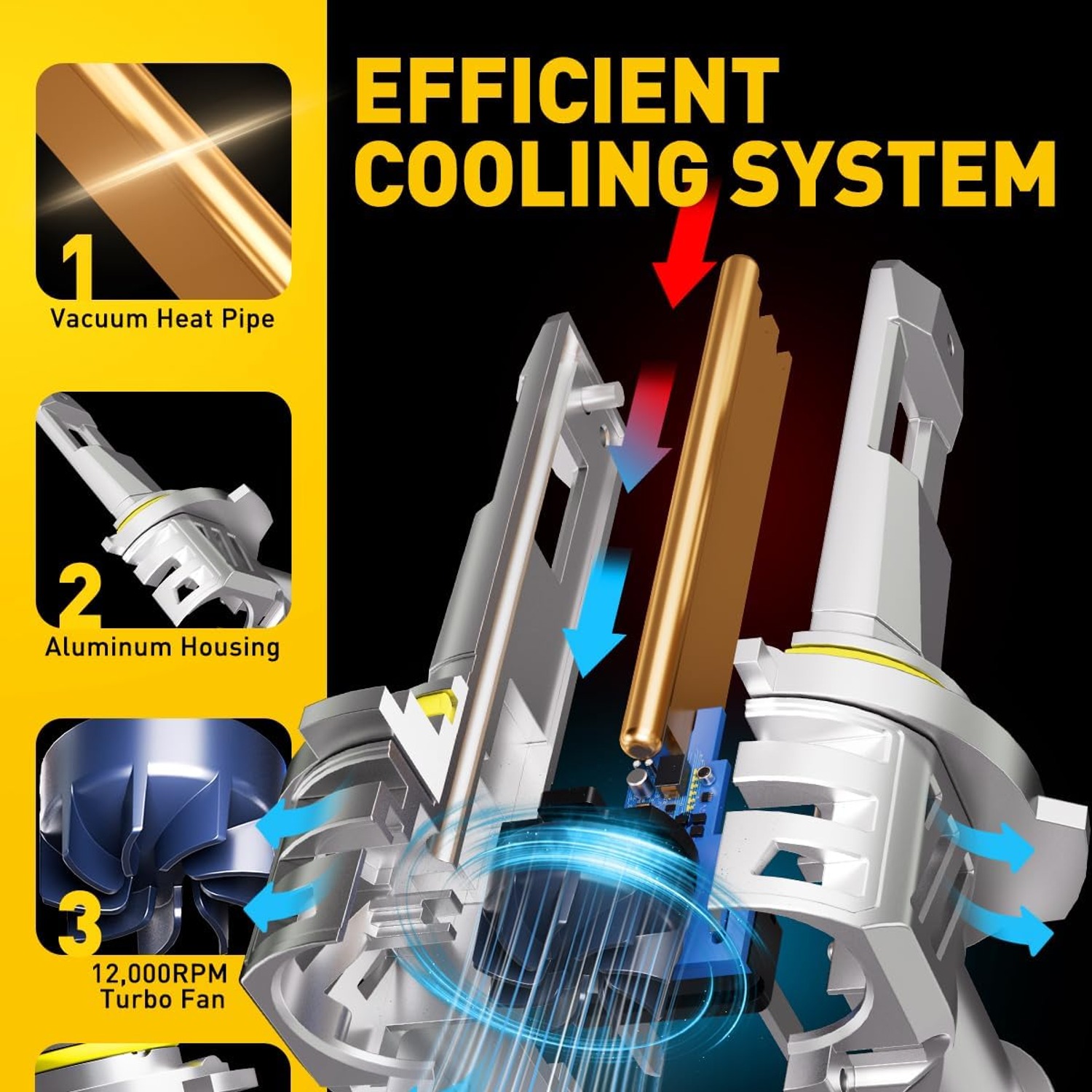
The catch is heat. LEDs do not tolerate heat well, so something has to move it away from the chips. There are two common approaches. Passive designs use a finned heatsink or a flexible braided tail. Active designs use a fan. These bulbs are active: the body is aluminium and there is a built-in high speed cooling fan at the back.
That choice has one practical consequence worth planning for. A fan body needs physical space behind the headlight and needs air to move around it. Before you buy, pop the dust cap off and have a look at what sits behind the lamp. Some engine bays give you a generous pocket. Others have the airbox, the battery or a brake booster right there.
The numbers on this set
Each bulb is rated at 40 watts, and you get two in the pack. The colour temperature is 6500 Kelvin, which lands in the cool white range. Halogen globes usually sit somewhere between 3000K and 4300K, so the tone here reads visibly whiter and cleaner. If you are building a show car and chasing a modern look across the front end, that colour is usually the reason people go looking for 6500k led headlight bulbs in the first place.
The assembly carries an IP67 ingress rating. The 6 covers dust and the 7 covers temporary immersion in water. Headlight housings are not perfectly sealed environments, so a sealed bulb body is a sensible thing to have. We would still not treat it as a licence to wade a vehicle deliberately, and the dust cap needs to go back on properly either way.
Item weight is listed at 200 g.
Fitting them
The plug is non-polarity. That means the two pins can go in either orientation and the bulb will still light. Some conversion bulbs are polarity sensitive and need the connector flipped if nothing happens, so this is one less thing to fiddle with in a dark engine bay.
There is also no external driver box. Some conversion kits come with a separate module that has to be mounted somewhere, cable-tied down and kept out of the way of moving parts. Here the electronics sit inside the bulb assembly, which is why plug and play led bulbs tend to be the easier option for a first-time install.
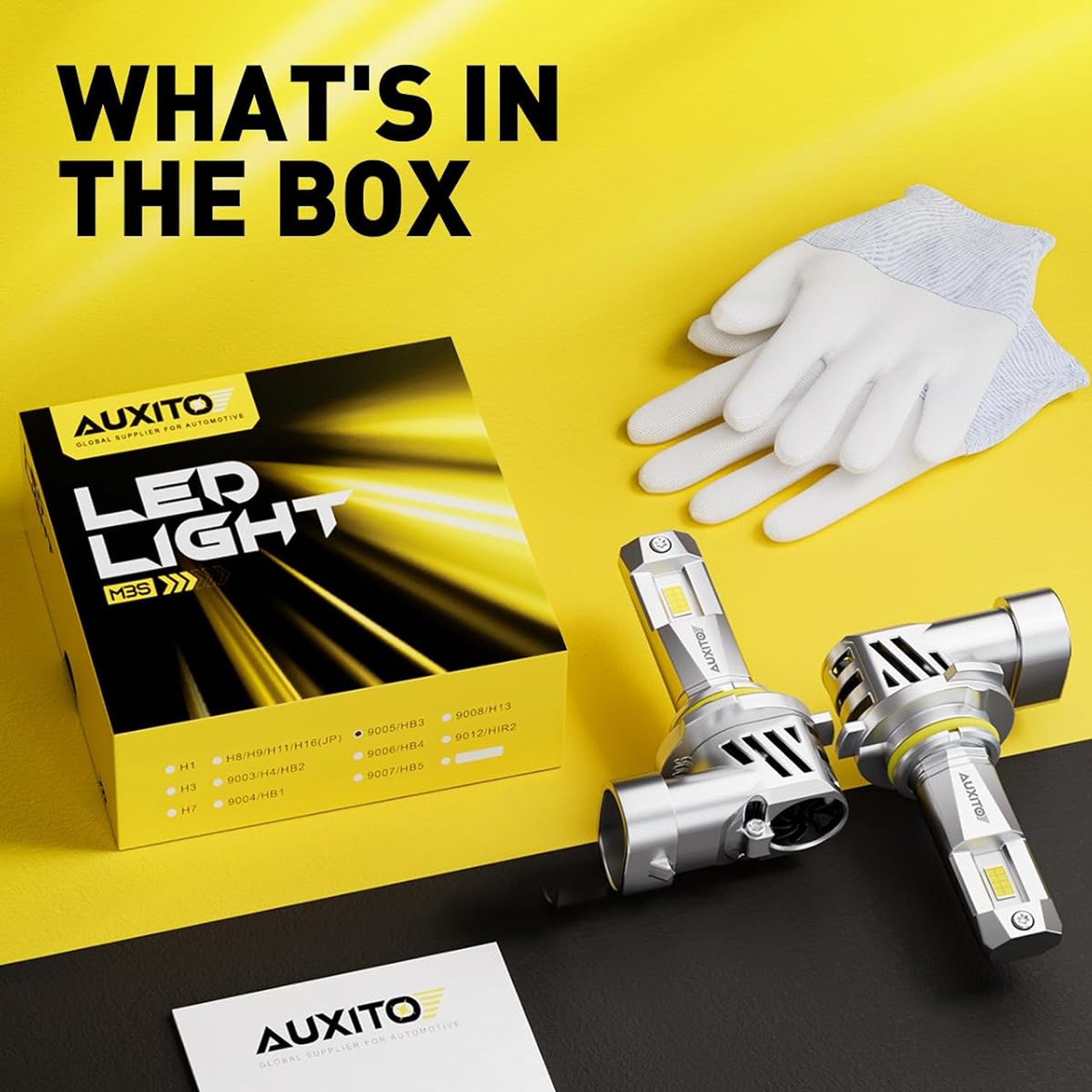
The job itself is short on most fittings. Engine off, lights cold, dust cap off, release the retaining clip, pull the halogen globe, seat the LED bulb in the same retainer, clip it down, plug in, refit the cap. Handle the bulb by the base and the aluminium body rather than the chips, and wear gloves if you have them.
Warnings and flicker
This is the part that catches people out. Some vehicles watch the current drawn on each lamp circuit. A halogen globe draws a known amount. An LED bulb draws less. The vehicle can read that as a blown globe and throw a warning on the dash. Other vehicles supply pulsed voltage to the lamp circuit, and an LED will visibly flicker on that supply where a filament would not.
The fix in both cases is a small inline module. A canbus decoder for led bulbs sits between the socket and the bulb and keeps the circuit reading as the vehicle expects. An anti flicker harness smooths out the supply. Neither one is included with this set, and there is no reliable way to know in advance which vehicles will need one. If you want certainty before you spend, an auto electrician can tell you in a few minutes.
Who this set suits
It suits someone who already knows the vehicle will not be used on a public road with these fitted, who has HB3 or 9005 as the confirmed fitting, and who has checked that there is room for a fan body behind the lamp. Show builds, paddock vehicles, competition cars and private property machines are the fit.
It does not suit a daily driver that needs to pass a roadworthy. It also cannot be used in a daytime running light position, which is stated plainly in the product information.
Looking after them
There is not much to it. Keep the fan area clear of dust, leaf litter and road grime, because an active cooling design relies on airflow. A short blast of low pressure air clears most of it. Wipe the body with a dry cloth and keep liquid away from the connector.
Make sure the dust cap seats properly after fitting. An IP67 rating on the bulb does not help much if water is pooling inside the housing because the cap was left half on. And if you ever pull one out, store it in the original packaging rather than loose in a toolbox.
The short version
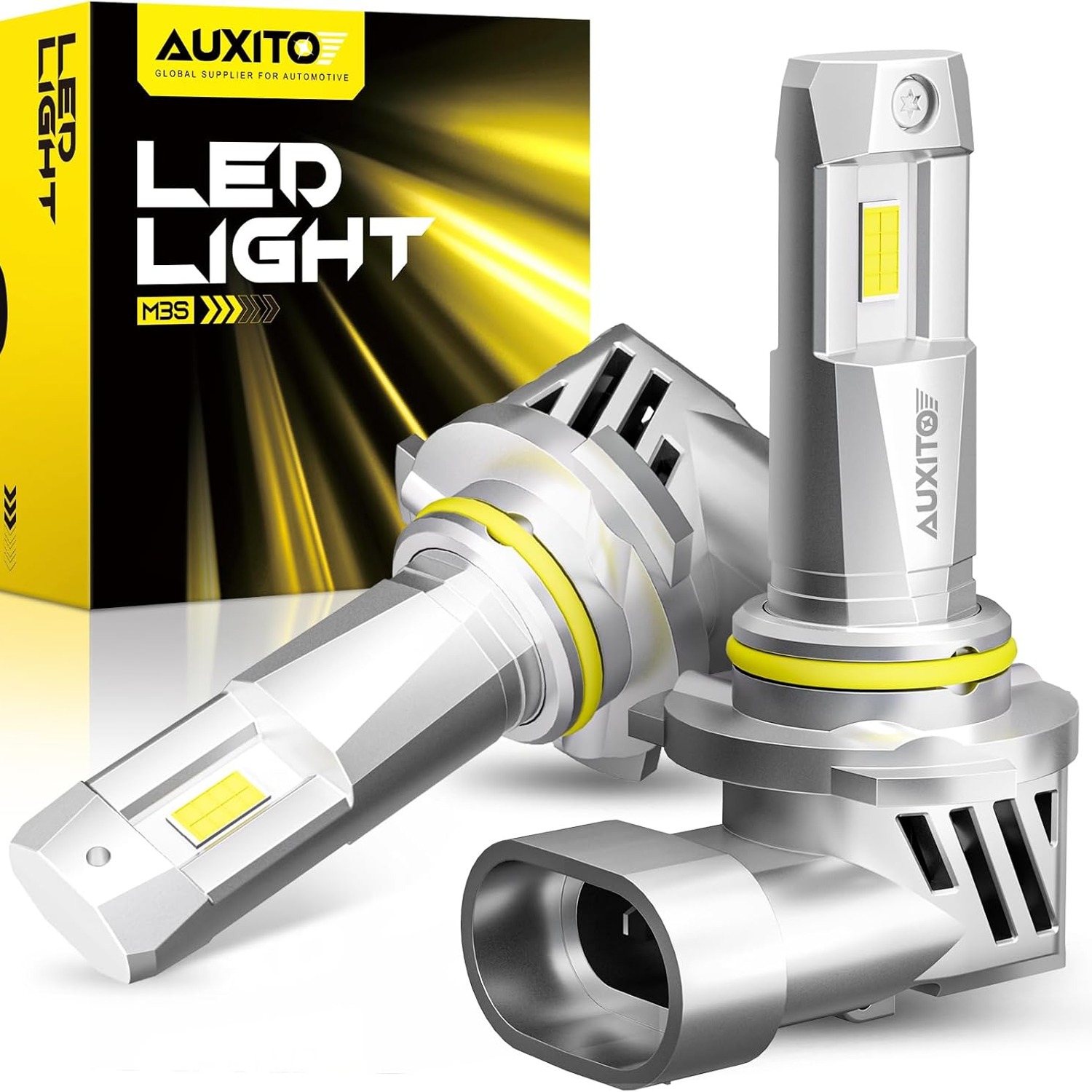
This is a pair of HB3 9005 LED headlight bulbs rated 40 watts each at 6500K, with an aluminium body, a built-in cooling fan and an IP67 seal. They plug straight into the HB3 socket with a non-polarity connector and no external driver. Some vehicles will need a decoder, which is not included.
They are sold for off-road, show and private property use, and not for public road use in headlights designed for halogen globes. Check your fitting code, check your clearance, and if either one is unclear, ask before you order.