
The complete guide
H7 LED Headlight Bulbs, A Practical Buyer's Guide
The problem these bulbs solve
You have a project car, a paddock ute, a show build or a track day runabout, and the standard halogen globes look tired. They throw a yellow light that makes the whole front of the vehicle look dated, and if you have swapped a few over the years you know they are consumables. An H7 LED conversion kit is the usual answer. You pull the old globe, slot in an LED, and the colour of the light changes completely.
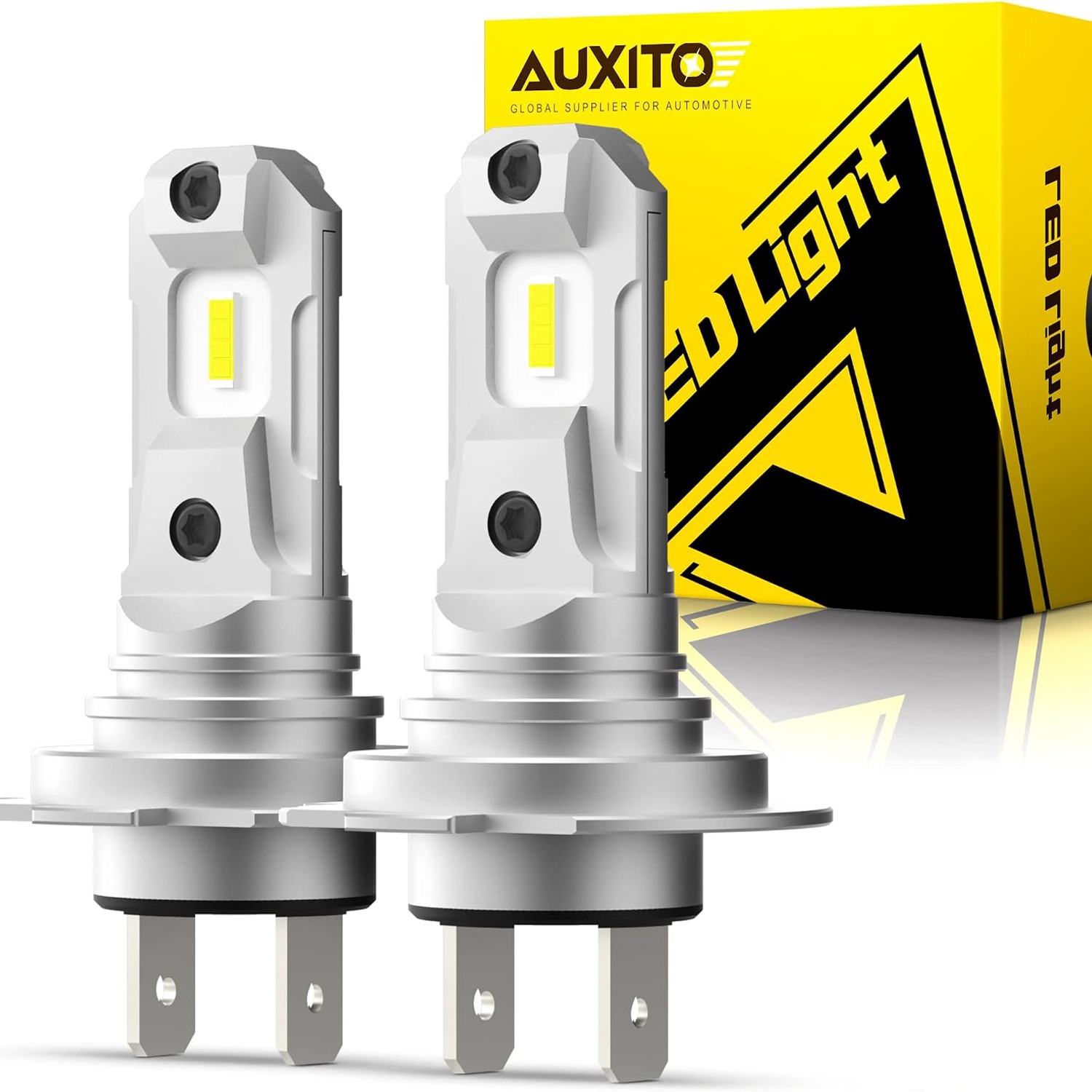
This pack is two H7 LED bulbs, each running 16 watts on a 12 volt supply, putting out light at 6500 Kelvin. They are fanless, with an aluminium body doing the heat work, and they carry an IP67 rating against dust and water.
Before anything else, the important bit. In Australia, fitting LED bulbs into headlight assemblies that were designed for halogen globes is generally not permitted on public roads. These bulbs are sold for off-road, show and private property use. That is not a disclaimer buried in small print, it is the whole basis on which they are listed. If the vehicle gets driven on public roads, keep the original halogen globes fitted.
How an H7 LED bulb works
A halogen globe heats a filament until it glows. An LED bulb does something different. It passes current through semiconductor chips that emit light directly, and almost all of the engineering around them is about getting rid of the heat those chips produce. Heat is what kills LEDs, so the body of the bulb matters as much as the chips.
There are two common approaches. Some bulbs use a small fan inside the base to force air across a heatsink. Others, like this set, go fanless and rely on an aluminium body with enough surface area to shed heat passively. Both work. The fanless route is quieter, has no moving part to seize or clog, and tends to be more tolerant of a dusty environment. That is why people with off-road and paddock vehicles often look for the best fanless h7 led bulbs rather than a fan-cooled type.
The 6500 Kelvin figure is a colour temperature, not a brightness number. It tells you where the light sits on the warm-to-cool scale. A typical halogen globe lands somewhere around 3200K and looks yellow. At 6500K you get a cool white. Side by side the difference is obvious, which is the main reason people make the swap on a show vehicle.
The CANbus question
This catches people out, so it is worth understanding before you start.
Plenty of modern vehicles monitor their lighting circuits. The module checks how much current the globe is drawing and uses that to decide whether the globe is still alive. A halogen globe pulls a fair amount. An LED bulb at 16 watts pulls much less. On a sensitive vehicle, the module reads that low draw and decides the globe has blown, so you get a warning on the dash. Sometimes the circuit tries to pulse the output to test it, and the result is visible flicker.
The fix is a CANbus decoder, a small module that sits inline and makes the circuit see a load closer to what it expects. It is not included with this pack. If you know your vehicle is fussy about lighting faults, order a decoder at the same time so you are not halfway through the job with the bumper apart and no way to finish.
Not every vehicle needs one. Older vehicles and simpler circuits often take an LED bulb with no complaint at all. You usually find out within about ten seconds of switching the lights on.
Who this suits
This set makes sense for a few kinds of buyer.
The project car owner who wants the front of the vehicle to look right at a show, and who is not driving it on public roads with these bulbs fitted. The owner of a farm or property vehicle that stays on private land. Someone building a track day car. Someone who wants a spare pair of H7 LEDs in the toolbox for a non-road application.
It does not suit someone looking for a road-use headlight upgrade on a daily driver. There is no version of that story that works here, and we are not going to pretend otherwise.
It also will not suit you if your housing does not take an H7 globe. Fitment with these is by fitting type only. We do not claim fitment for named vehicles, and we do not claim they fit everything. Pull your existing globe out and read the base, or check your owner's manual, before ordering.
How to choose between H7 LED options
A few things actually matter when you are comparing one H7 LED bulb against another.
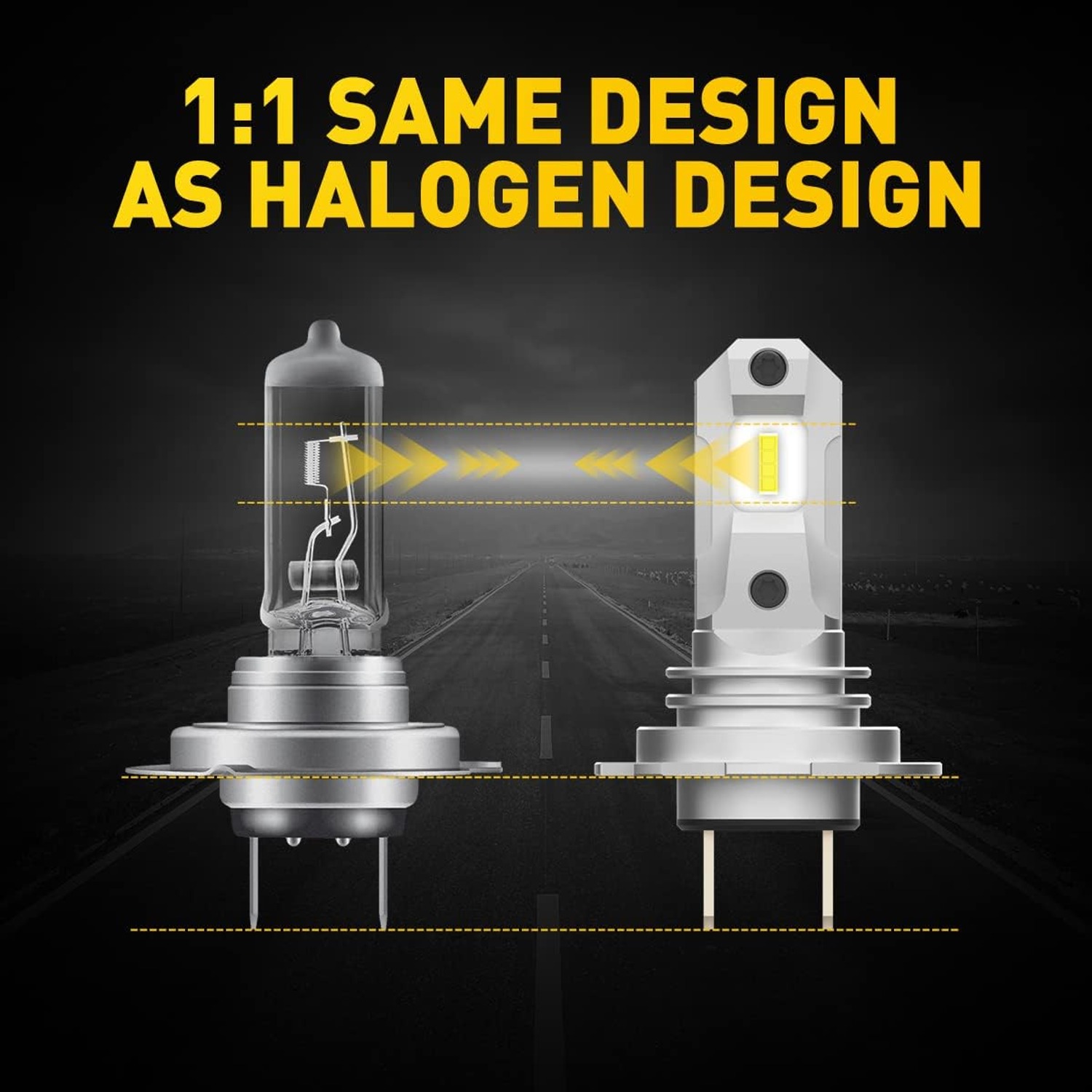
Size and shape. A bulb that is close to halogen dimensions with no separate driver box fits in far more housings than a bulky one with a cable and a module hanging off it. These are all-in-one, which keeps the install tidy and the dust cap closeable on most assemblies.
Cooling type. Fan or fanless, as covered above. Decide based on your environment and how much you care about noise.
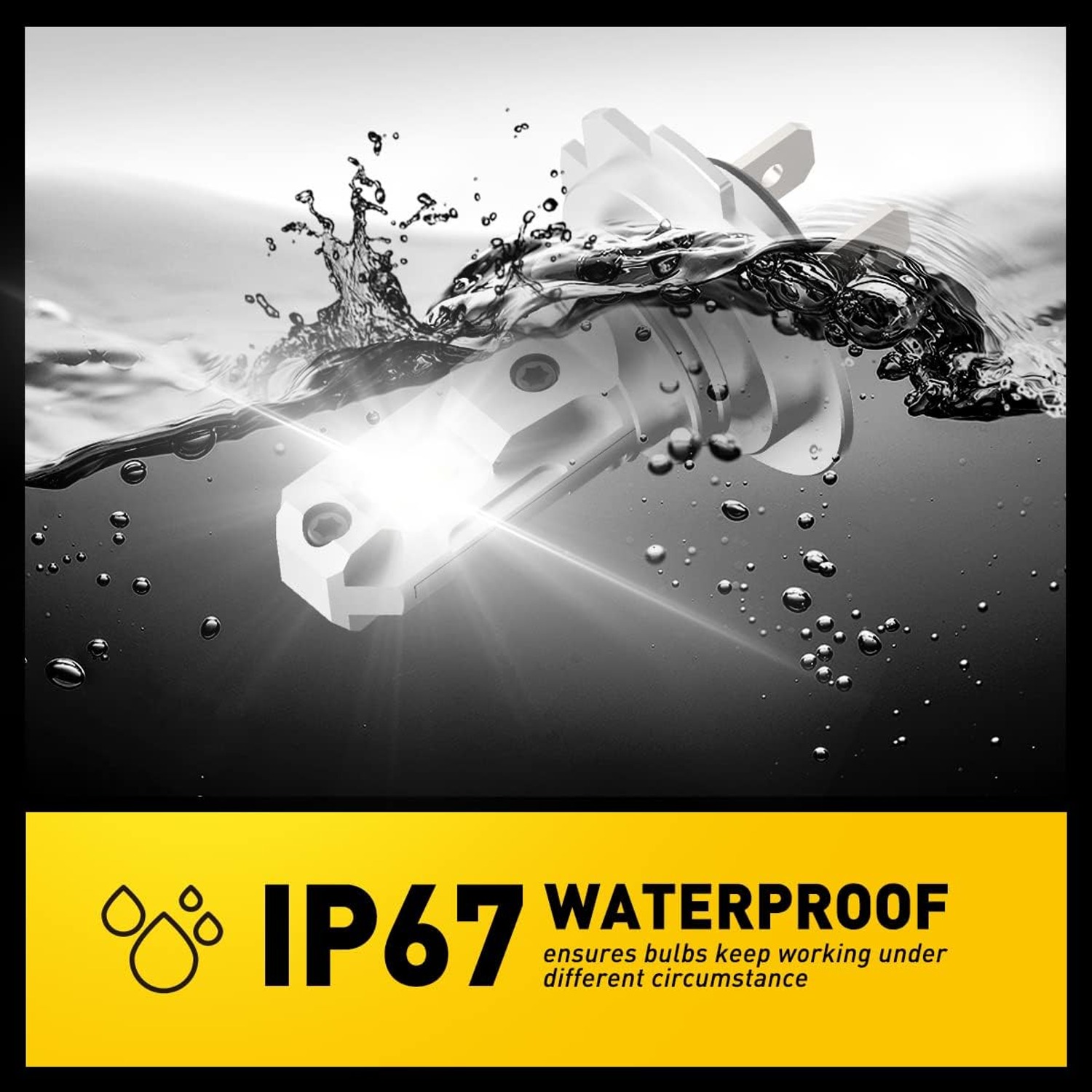
Sealing. An IP67 rating means the bulb is sealed against dust and water ingress under test conditions. If your housing is old, cracked or sits low on a vehicle that gets washed down, that sealing is worth having.
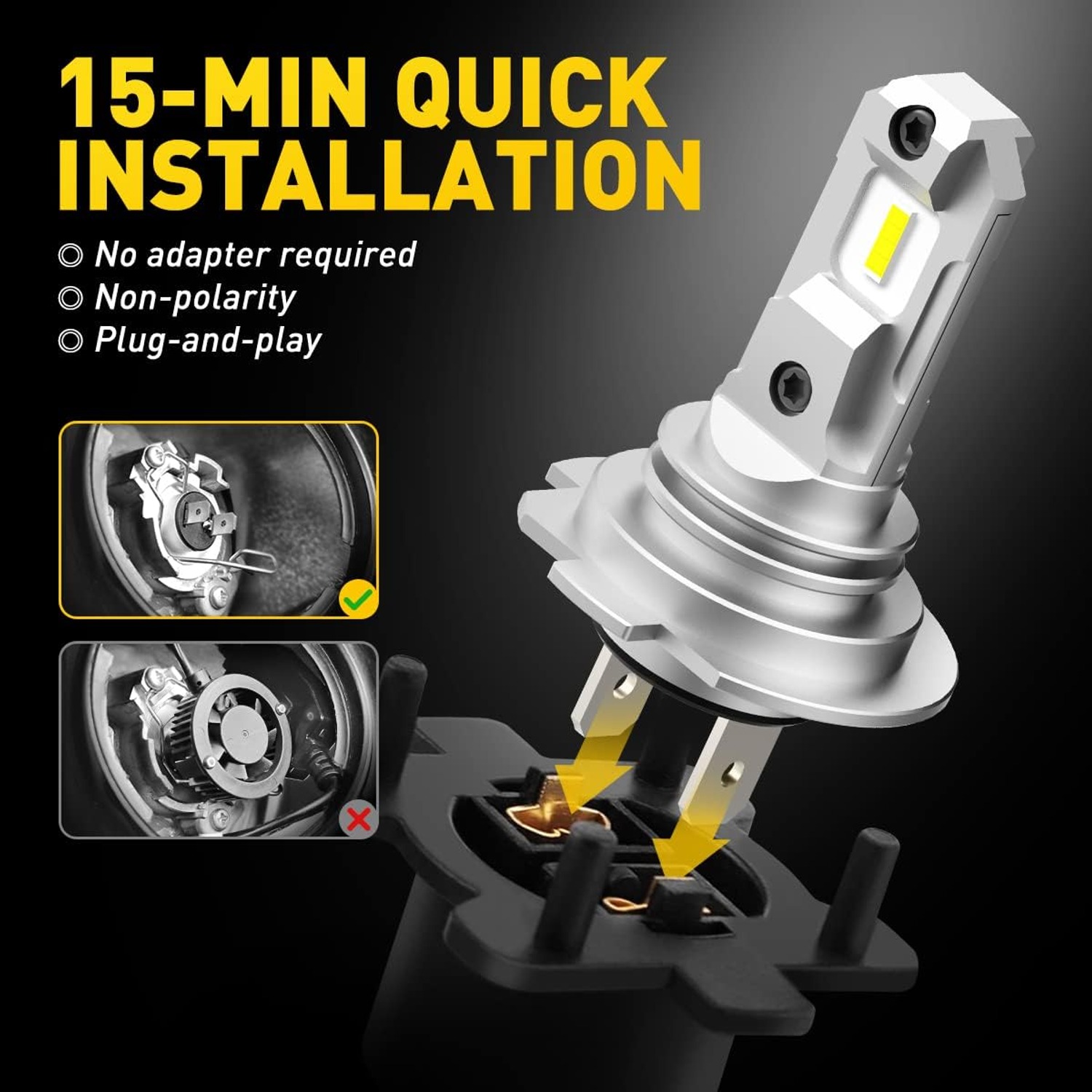
Polarity. Some LED bulbs only light up one way around. These are non-polarity, which removes a small but annoying step from the install. If it does not light, flip the plug and it will.
Colour temperature. 6500K is a cool white. If you specifically want a warmer tone for a period-correct build, this is not that bulb.
What you should ignore is any seller quoting brightness multipliers or lifespan hours without evidence behind them. We are not quoting figures that are not in the product data, and neither should anyone else.
Fitting and care
The install on most vehicles is straightforward. Open the bonnet, find the back of the headlight assembly, remove the dust cap, release the retaining clip or ring, pull the old globe, slot the LED in, lock it down and reconnect the plug. Some vehicles need an airbox or a panel moved first. A few need the wheel arch liner out. Check your vehicle's procedure before you start removing clips you cannot get back in.
Handle the bulb by its base. The chips and the surface near them are the sensitive part, and grit or finger oil there does the bulb no favours.
Once fitted, care is minimal. Wipe the bulb body and the outside of the housing with a dry, lint-free cloth. Skip solvents, petrol and abrasive cleaners anywhere near the bulb or the reflector. Keep the aluminium body free of built-up dirt, because that aluminium is doing all the cooling work and a layer of mud on it is not helping. Make sure the dust cap goes back on properly. An IP67 bulb in a housing full of water is still a housing full of water.
The short version
Two H7 LED bulbs, 16 watts each at 12 volts, 6500 Kelvin cool white, fanless with an aluminium body, IP67 sealed, non-polarity, and compact enough to fit where a halogen globe fits. Total item weight 140 g.
Sold for off-road, show and private property use. Not for use on public roads in headlights built for halogen globes. Some vehicles will want a CANbus decoder to clear a bulb warning or stop flicker, and that decoder is not in the box.
If your housing takes an H7 globe and the use case is right, this is a simple, quiet, tidy set. If you are not sure the fitting matches, check before you order and we will help you work it out.